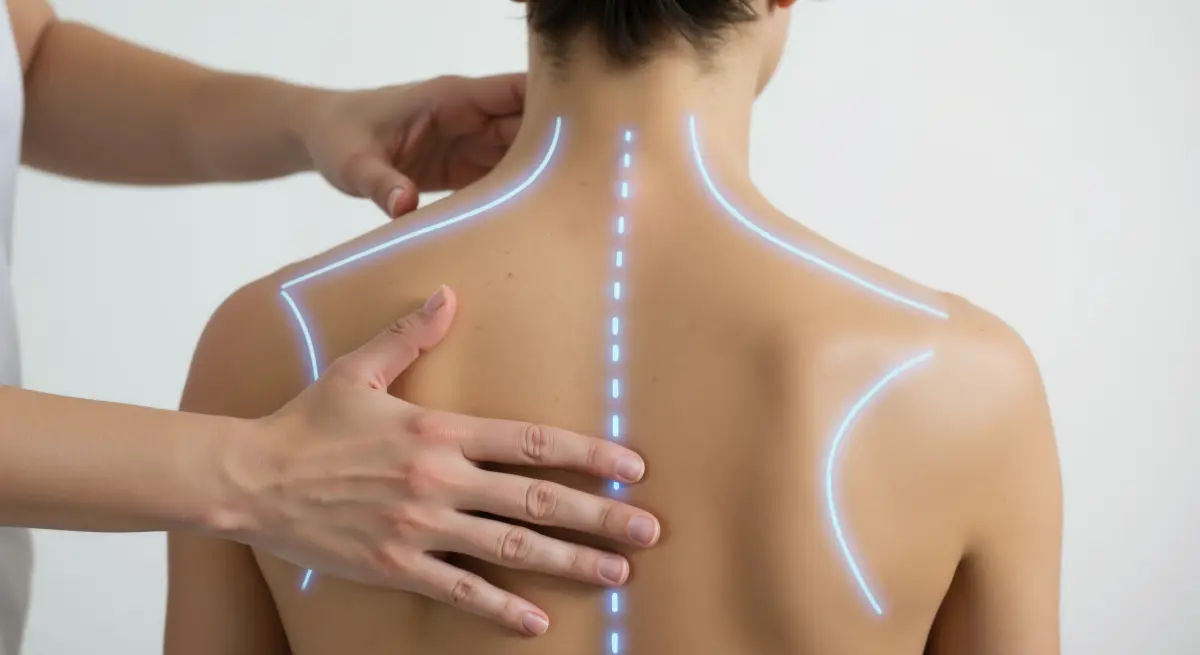
In the big picture, Structural Integration is interested in exploring and evolving human potential. As a manual therapy, it is a process of 're-education' that interfaces with the body's connective tissue as a medium for change.
Developed by Dr. Ida Rolf in the mid-twentieth century, this systematic approach reshapes the body's posture and movement through manipulation of the fascial network—the connective tissue web that surrounds every muscle, bone, organ, and nerve in the body. The Rolf Method works on the principle that the body functions best when its segments are properly aligned with gravity. When they are not, chronic pain, restricted movement, and compensatory patterns follow.
At Align, our Structural Integration practitioner is Jeannie Kelley, who is advanced certified in the Rolf Method.
What to Expect
Upon arrival, Jeannie will discuss with you your health history as well as your goals. Most sessions begin with an alignment assessment (standing and walking) in your 'SI attire' (everyday undergarments). Together you will both observe how your body is organized in space, noting areas of compression, rotation, or imbalance. This is used as a map for the session work. Strategies for a tailored approach will be considered, as well as any questions you may have.
(*Please read further about the Ten-Series approach)
The hands-on work is done mostly on the table, and may also include seated or standing work. You may be asked for active participation, like movement, to help facilitate change. Most commonly, the experience can be a relaxing and regenerative one, as the body receives the deep support and attention it needs. Integrative conversations and observations are also part of closing the session.
It's possible to feel improvements immediately, after you leave, or even in the days following. Occasionally it can take a few sessions for changes to come to fruition. These shifts generally continue with time, and also accumulate with further session work.
Most sessions average 75 minutes. Clients are asked to wear undergarments (bra and underwear) for Structural Integration.
Benefits
Structural Integration benefits people of all ages, and can assist with a variety of issues such as:
- Chronic pain
- Postural corrections
- Athletic performance
- Healing from injury, surgery, or long-term stress
- Recovery after pregnancy and childbirth
- Mental and emotional wellness
- Personal growth and awareness
- Transitions in life
The Ten-Series Approach
Structural Integration was classically designed as a ten-session sequence which served as a teaching tool as well as a reliable process. Dr. Rolf's original template was organized as follows:
- Sessions 1–3 (Sleeve sessions): Establish breathing, open the outer layers of fascia, and create more space throughout the body
- Sessions 4–7 (Core sessions): Address the deeper structures, including the spine, inner leg lines that support the core, pelvis, and cranium
- Sessions 8–10 (Integration sessions): Connect and harmonize all the work completed, establishing a new, more efficient pattern of movement and posture
It is through this overall, full-body approach that individual symptoms (accumulated from events, injuries, and stress) are often reduced or relieved.
The process of integrating our body with gravity also raises our awareness about our own continuity. This enables our entire being to exist with more freedom, vitality, equilibrium, and resiliency.
Structural Integration can be a unique, personal journey into self-discovery, and clients who complete a series process tailored to their individual needs often describe it as transformative.
About the Rolf Method
Dr. Ida Rolf, known as 'the Mother of Fascia', was a pioneering thinker and creative scientist years ahead of her time. She spent much of her life exploring the human capacity for healing. Rolf's education, professional career, and life circumstances led her to explore various modalities that gradually evolved into what became known as "Structural Integration" and later took on the name "Rolfing."
Rolf's work was founded upon the physics and metaphysics of aligning the human body within the field of gravity. Her methodology seeks to address the development and liberation of an individual's innate potential, with the palliation of symptoms resulting as an ancillary benefit.
Questions about your session?
Our team is happy to help you choose the right treatment. Give us a call or browse all our services.